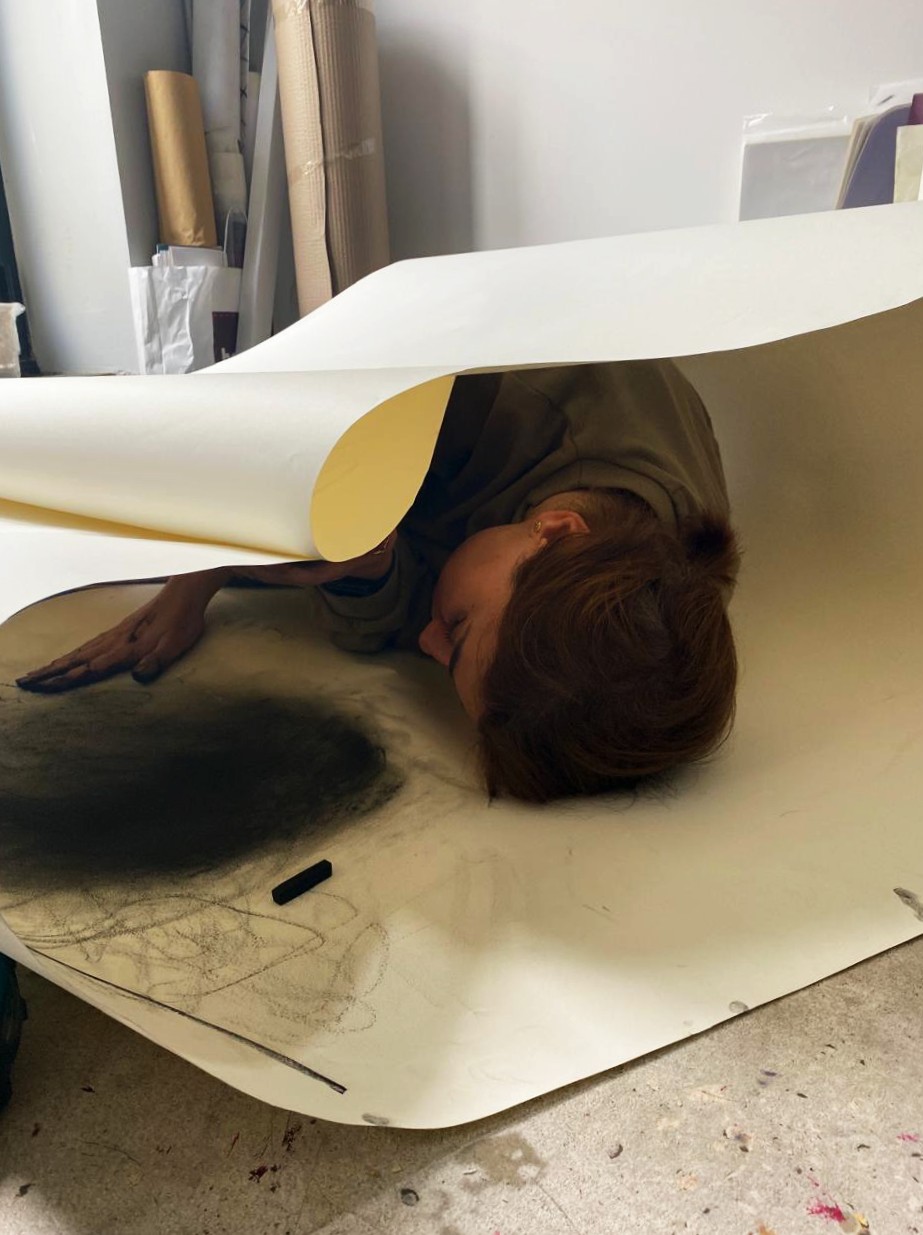
Drawing serves as the conceptual and material foundation of this practice—not as a tool for representation,
but as a method of inquiry. It operates as a site for excavation, where thought, memory, and materiality
converge in a slow unfolding. Gestural movement, tactile engagement, and the embrace of imperfection guide
a process that is intuitive rather than illustrative. In this context, drawing becomes an act of navigating liminal
space—a negotiation between presence and absence, intention and accident. As it unfolds across surfaces, into
space, or through layered processes, the work transcends conventional definitions, evolving into immersive,
multidimensional explorations of perception, embodiment, and transformation.
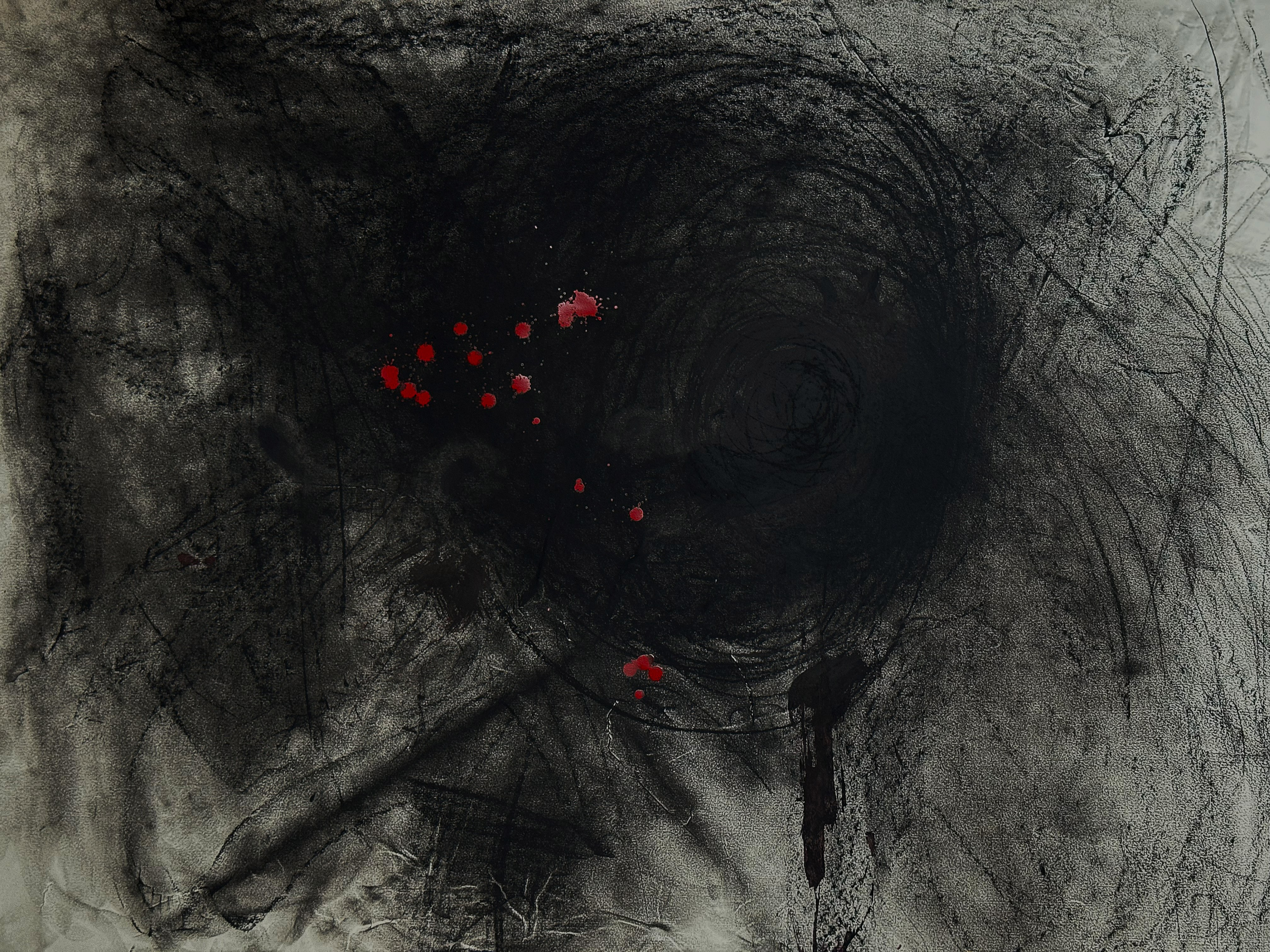 Charcoal and red ink on paper, 109 × 200 cm