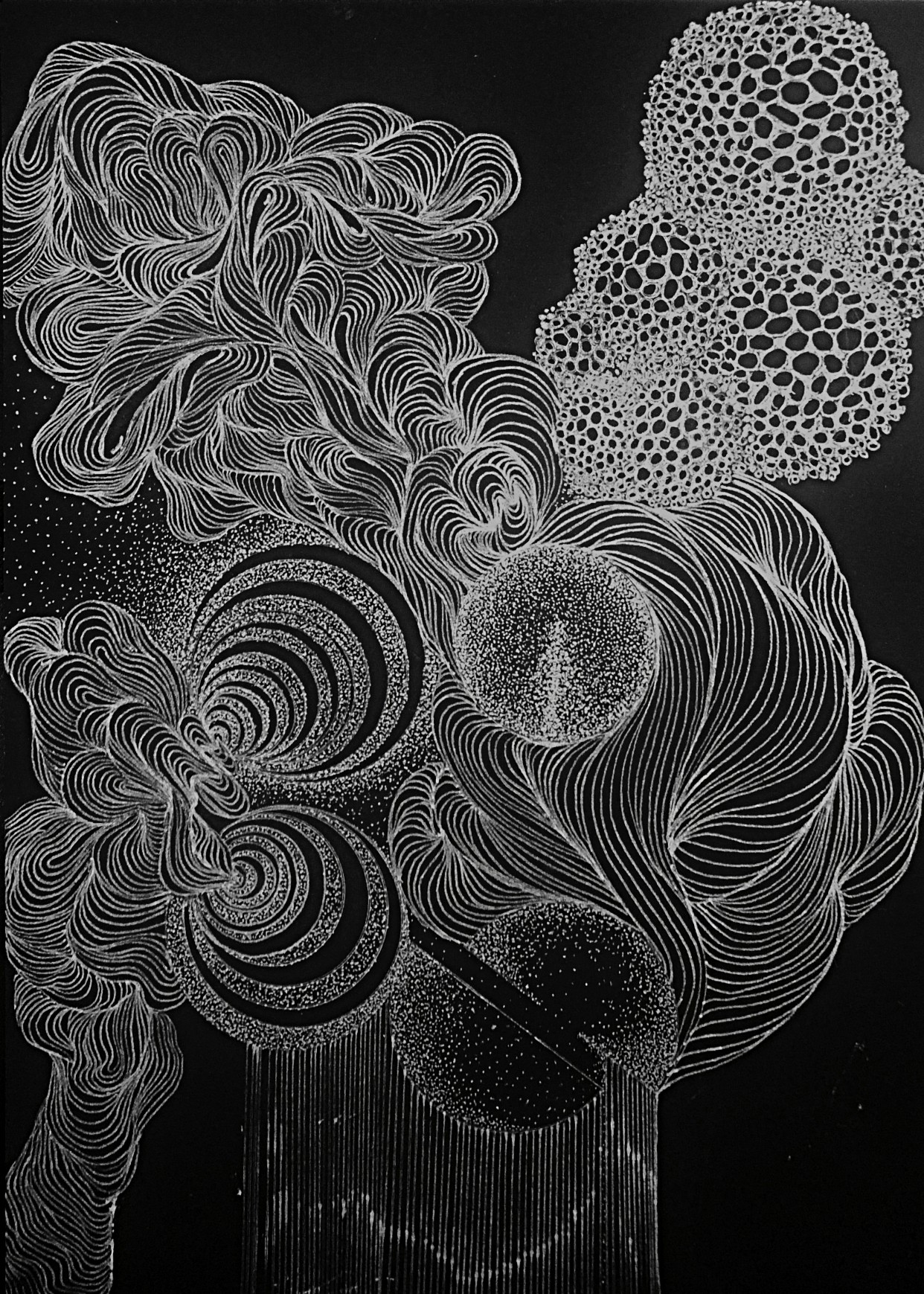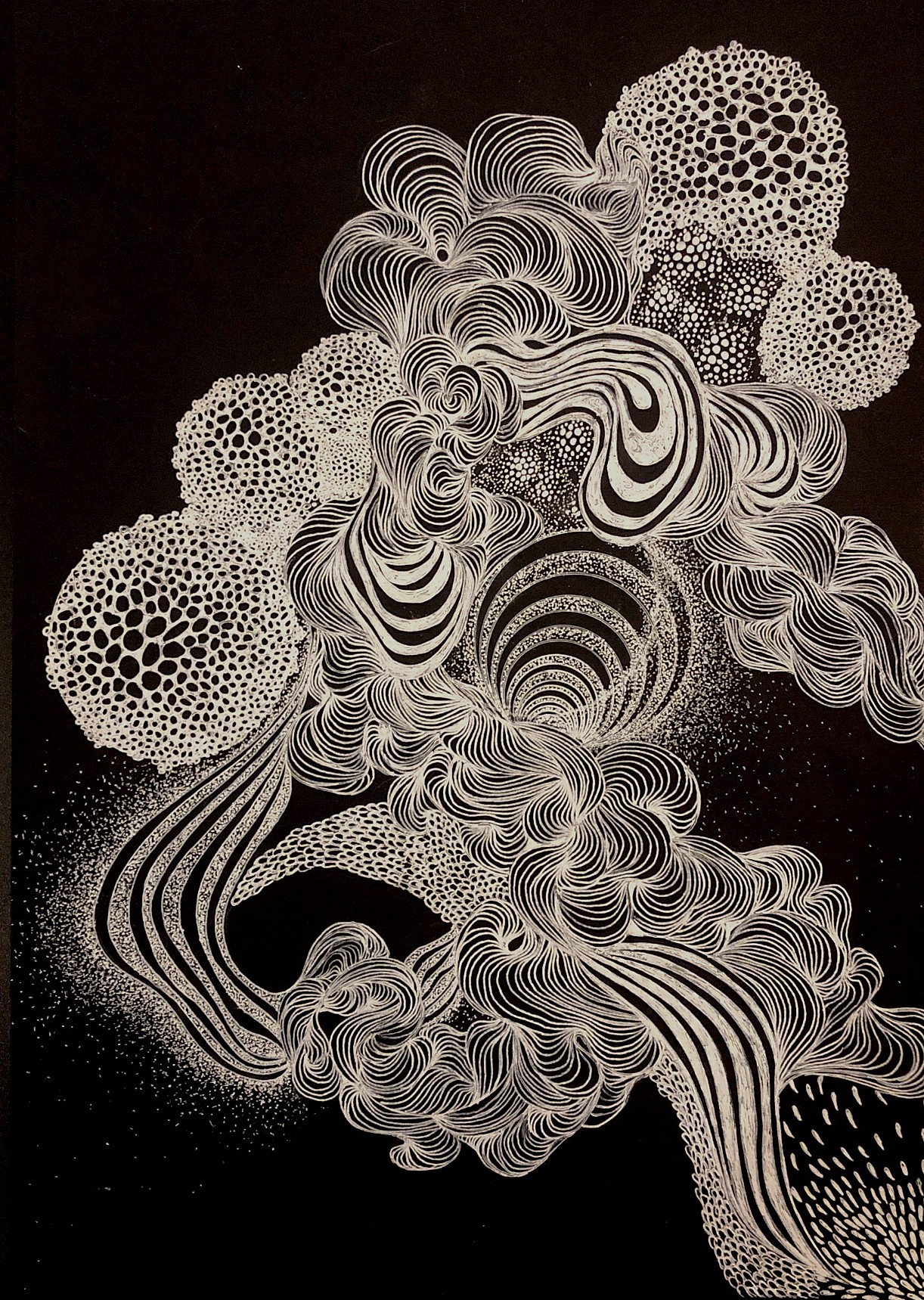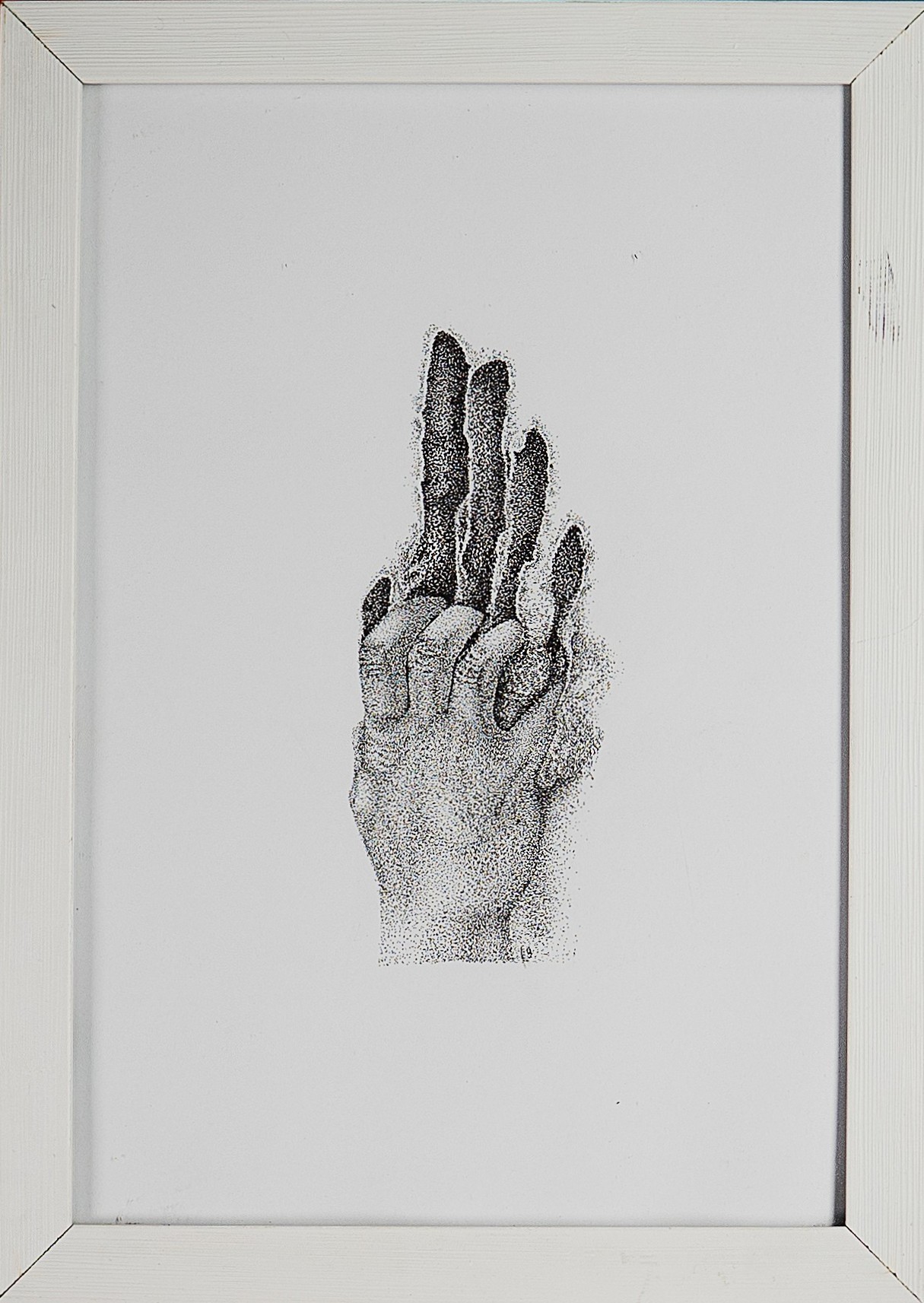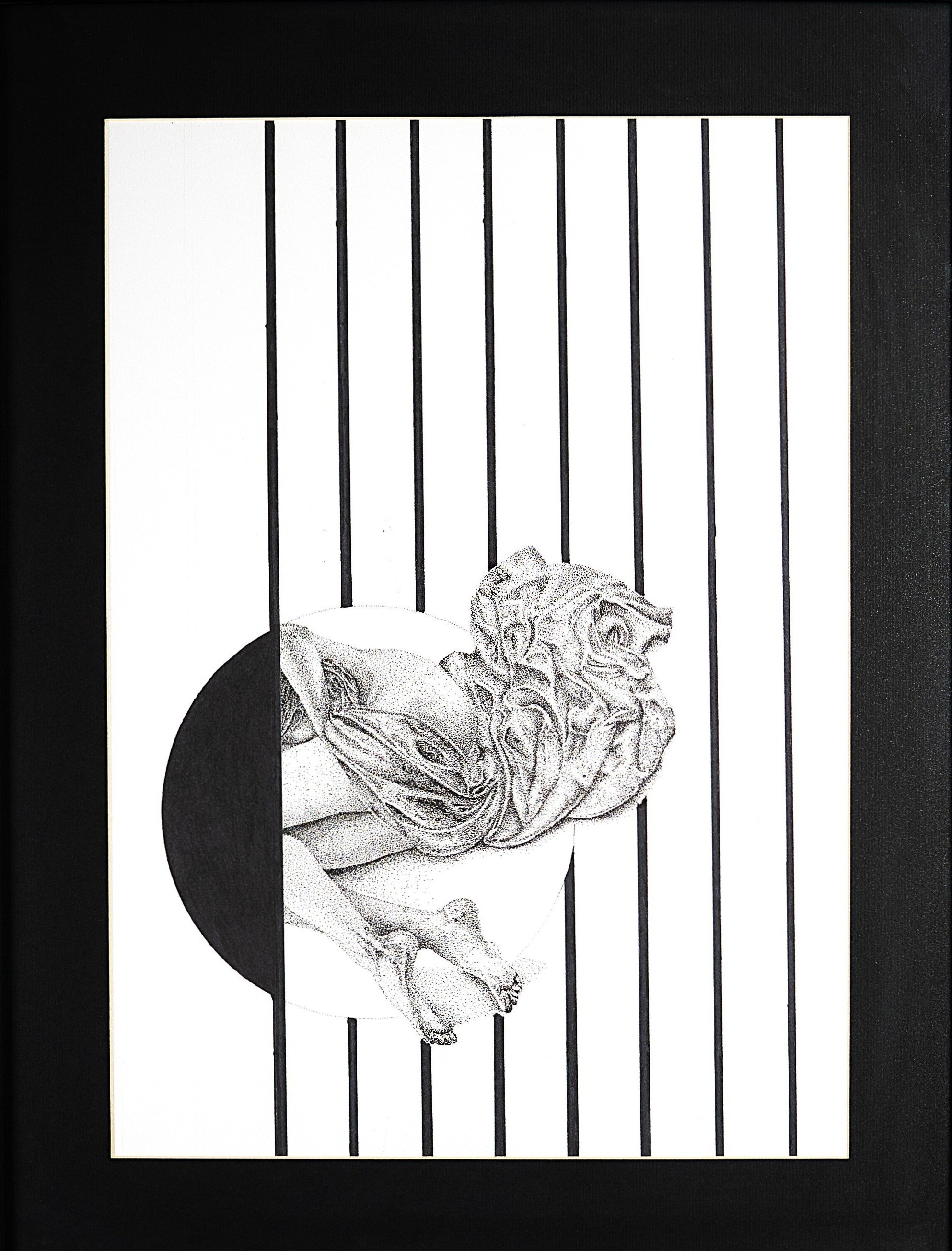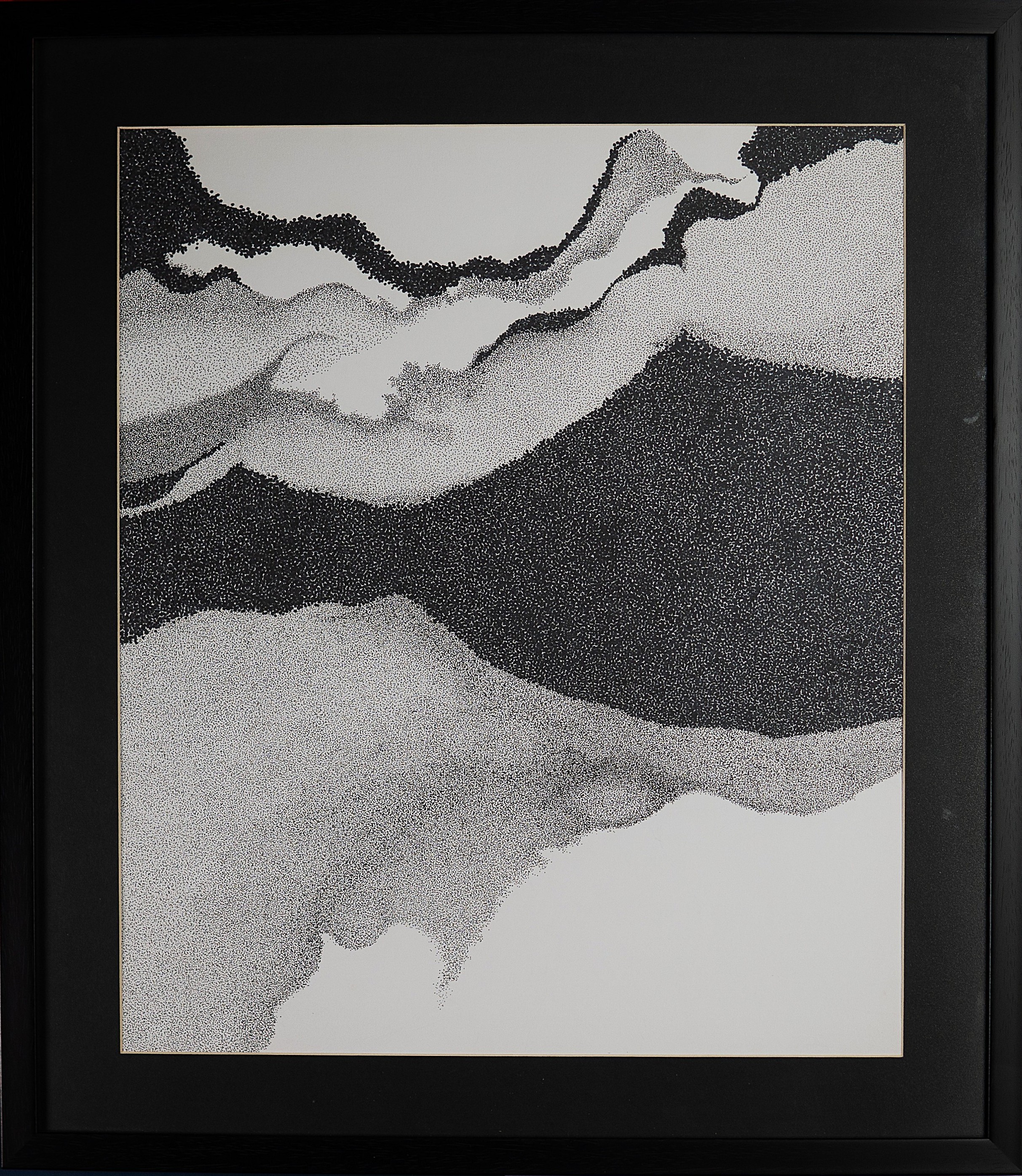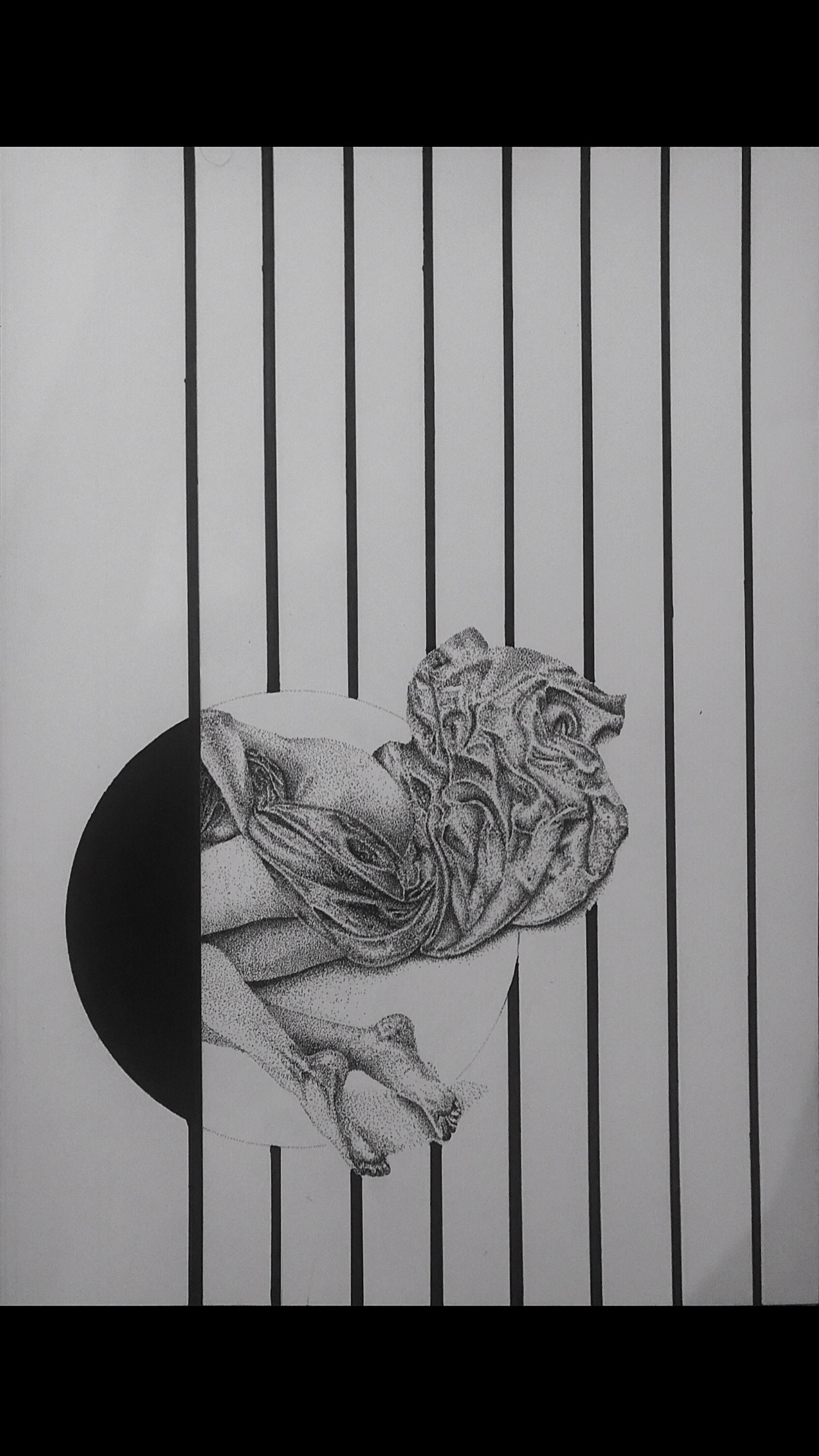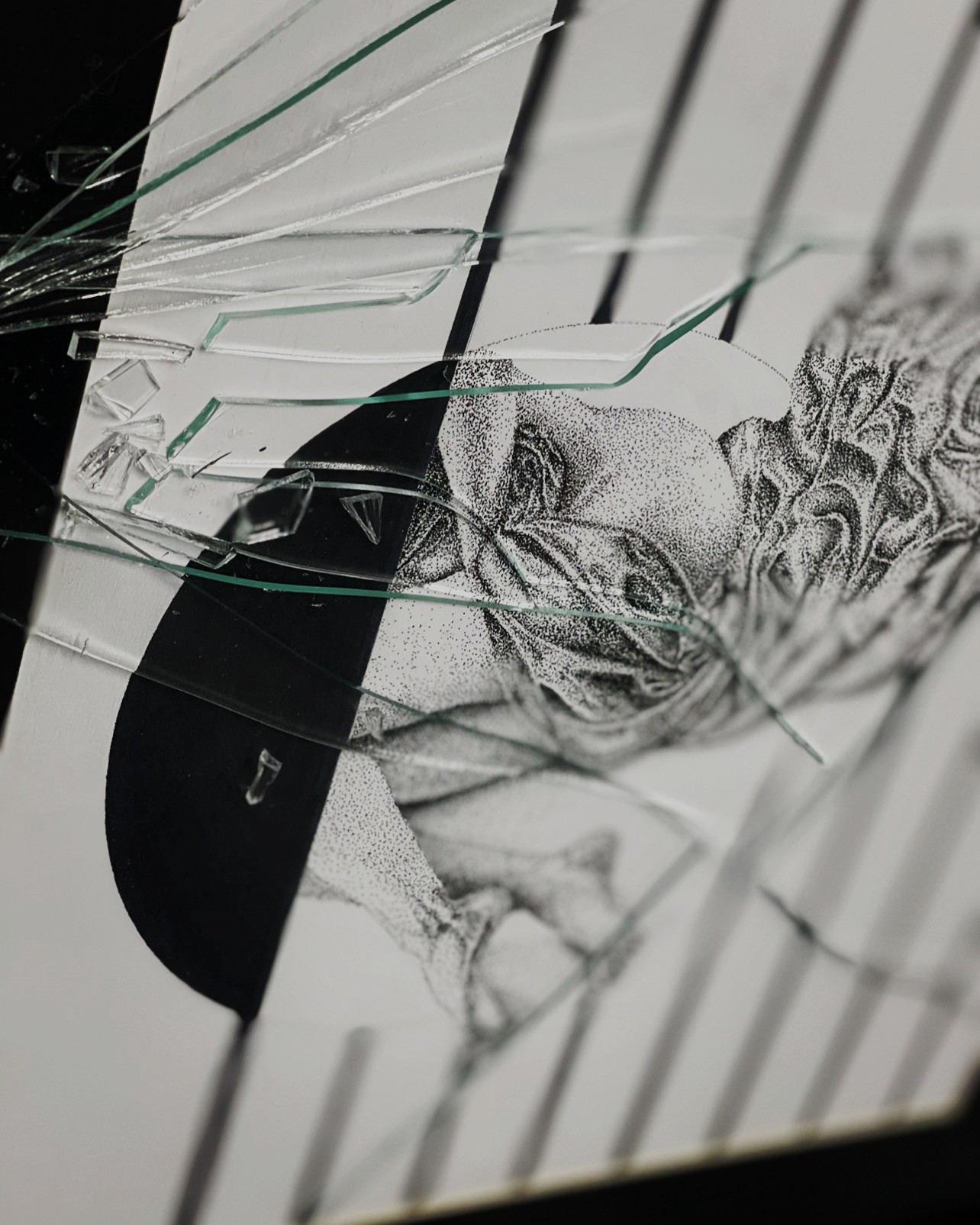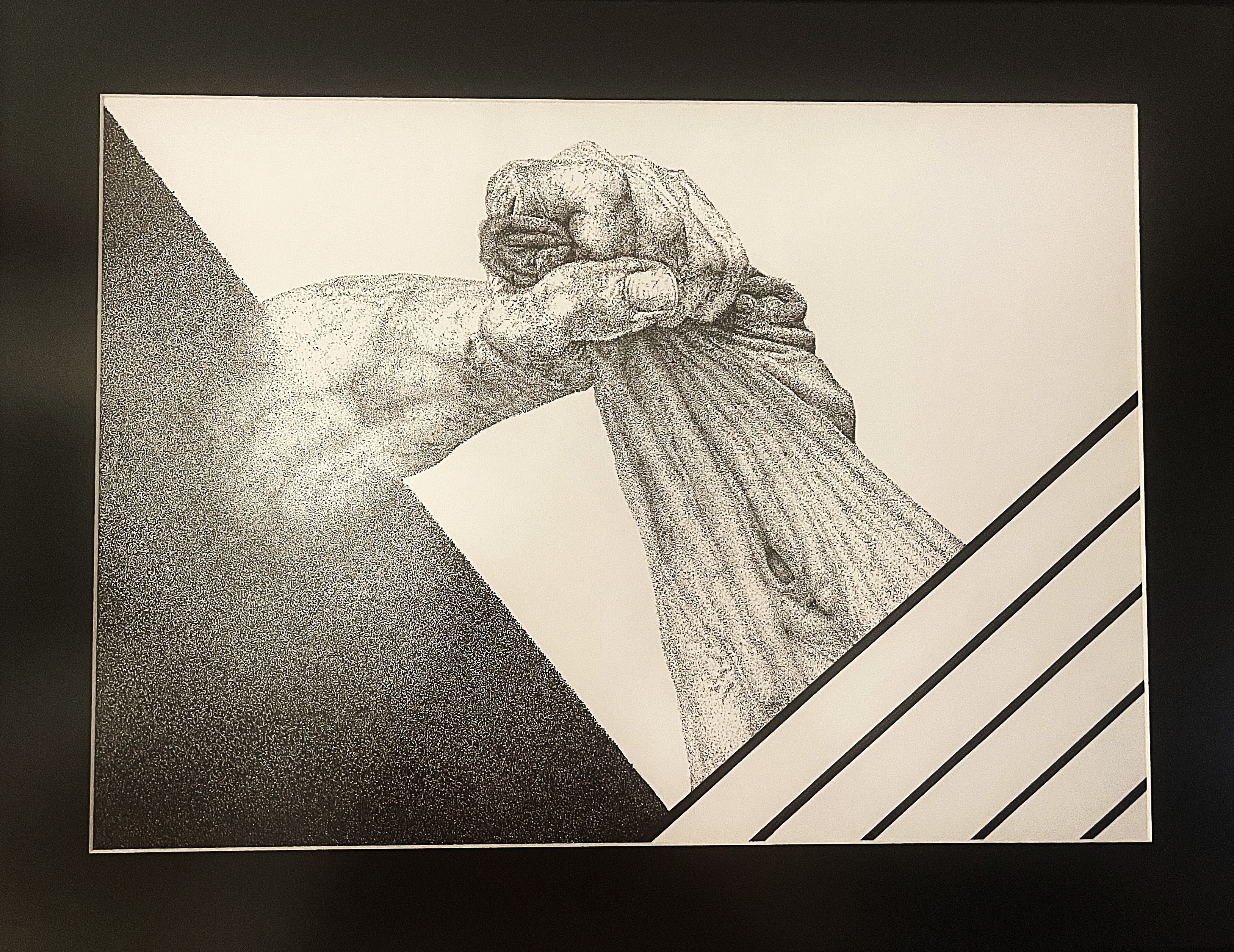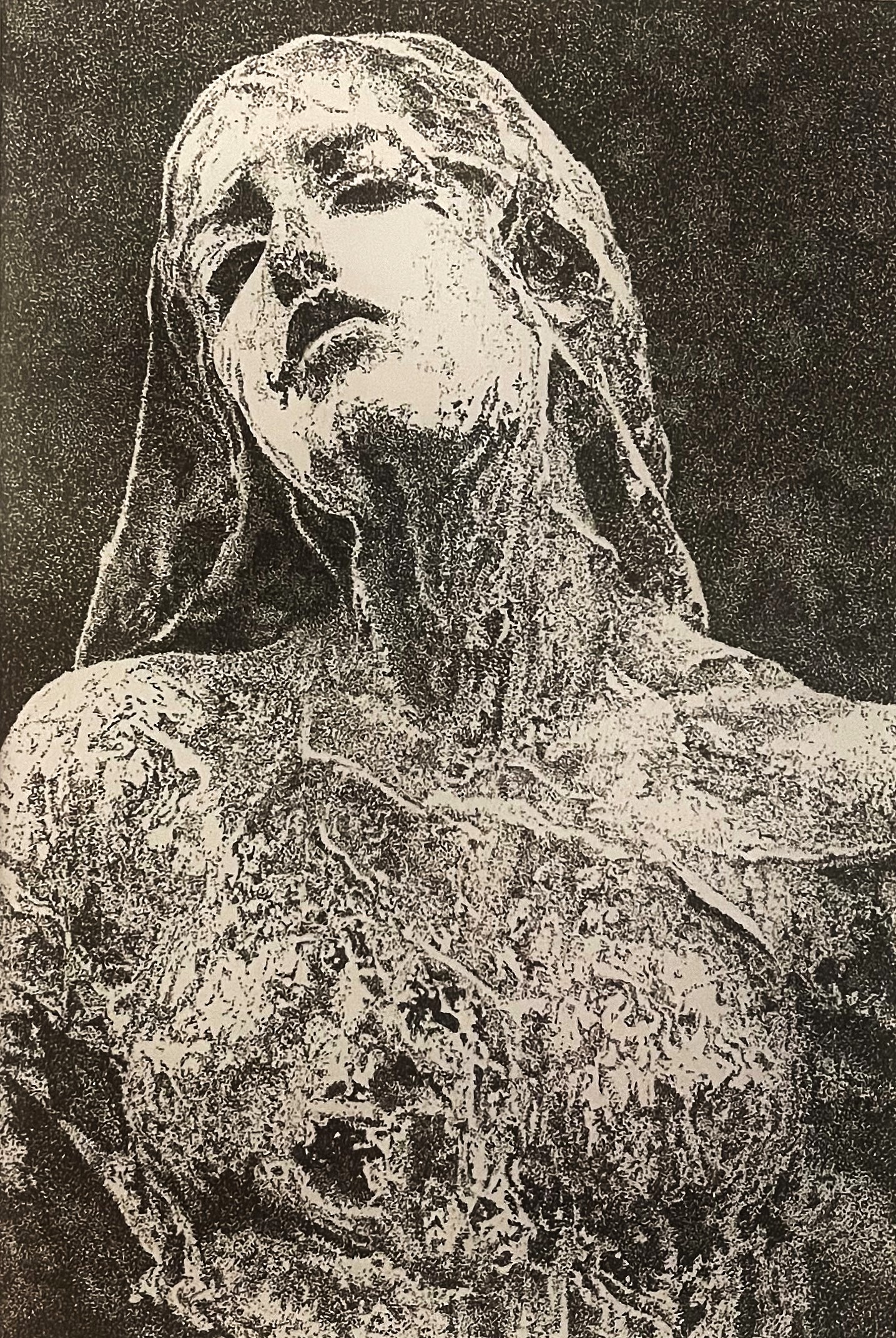
Dotwork practice 2020-2023
This body of dotwork began during the global lockdowns
following the COVID-19 pandemic in 2020, a period of prolonged domestic
confinement and suspended time. Drawing emerged as a private, repetitive act—an
intuitive way of occupying emptiness and responding to a suddenly restricted
world.
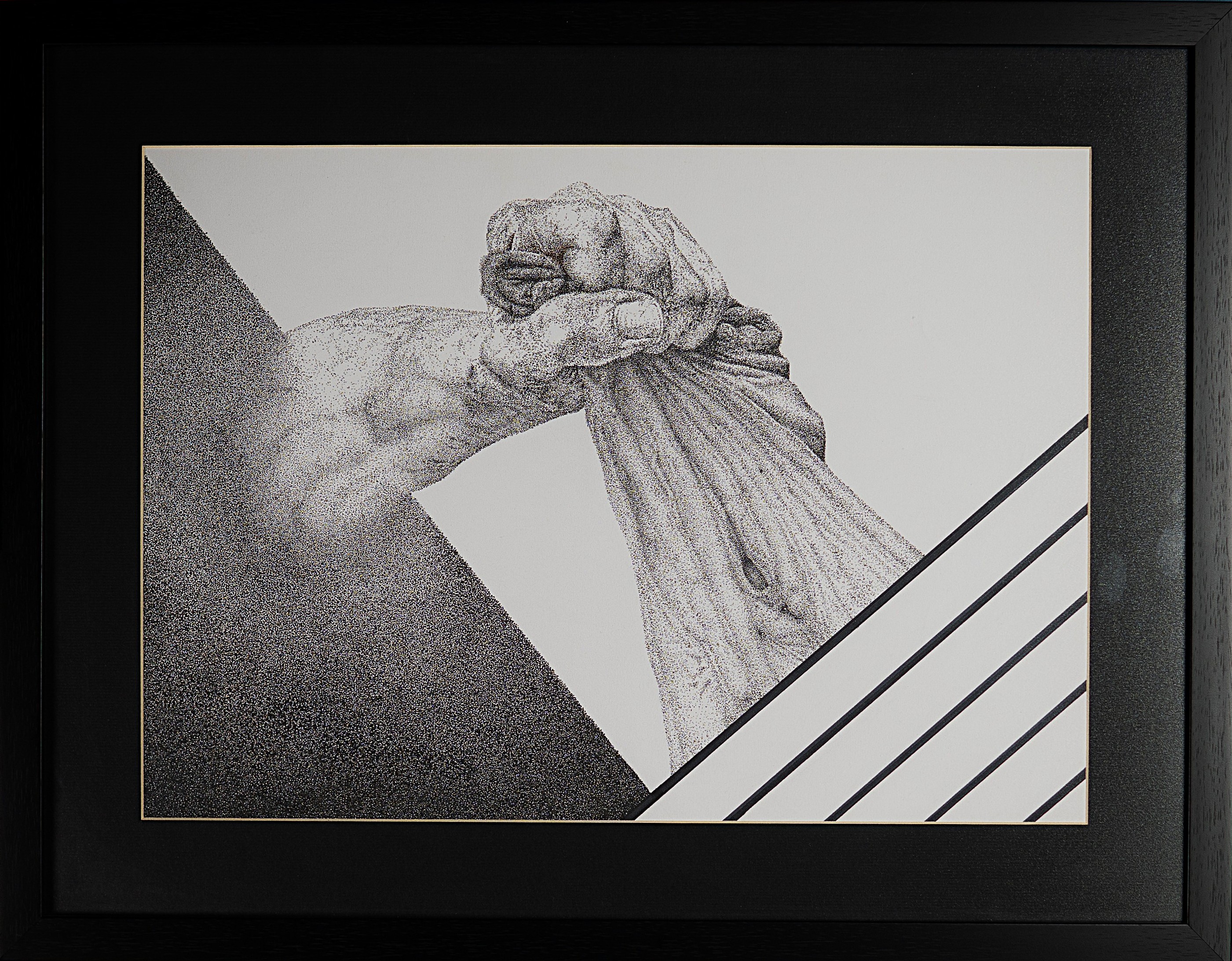
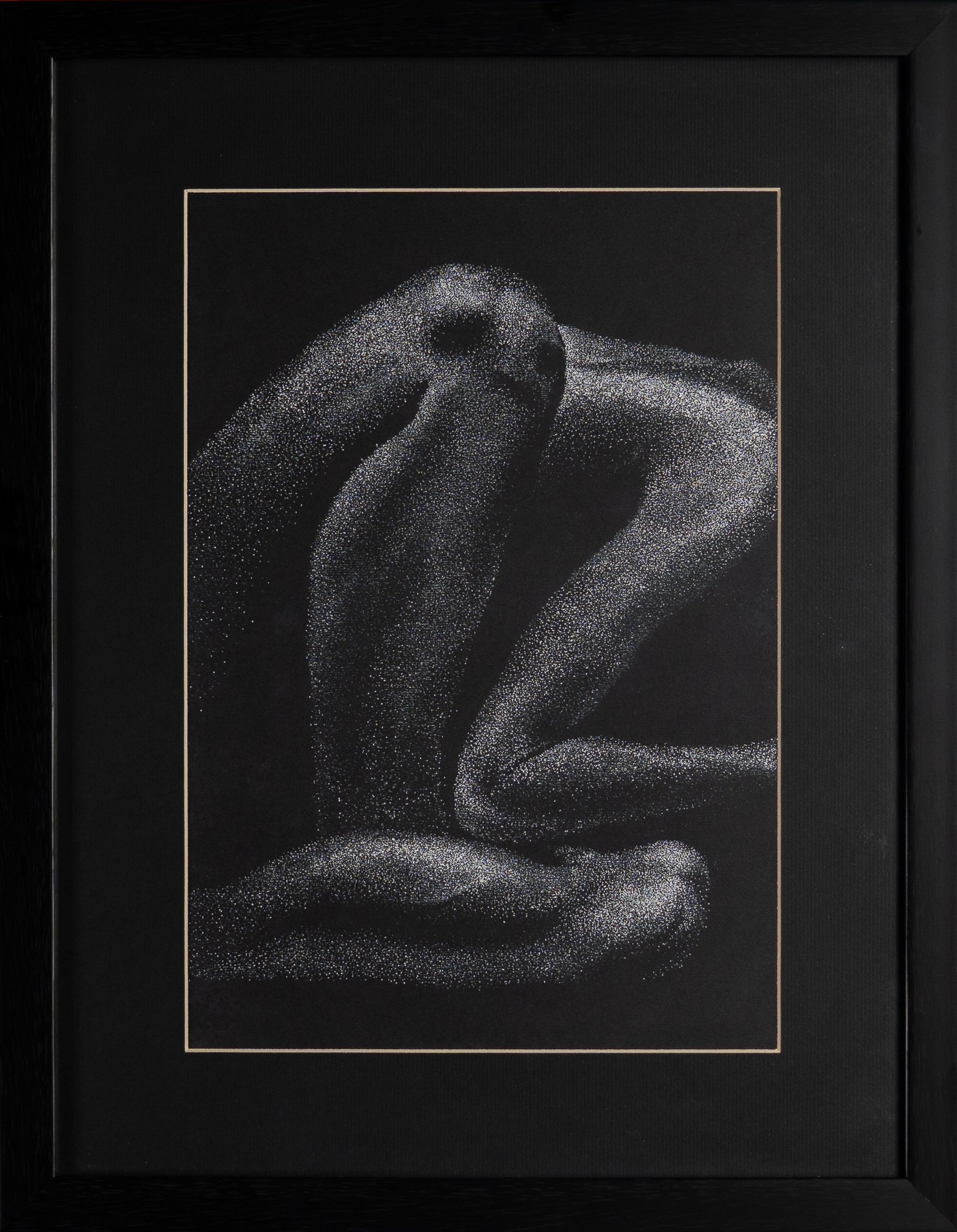
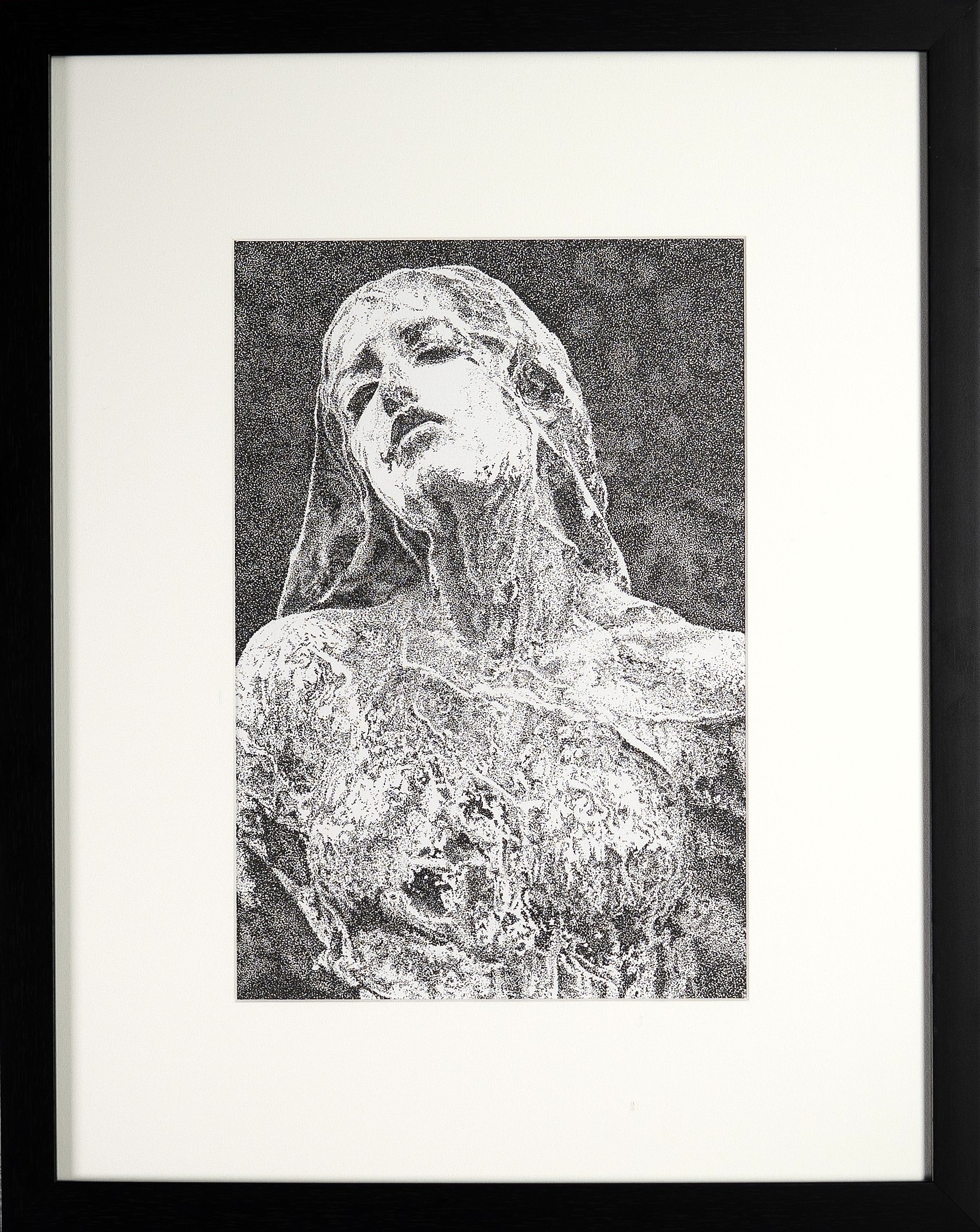
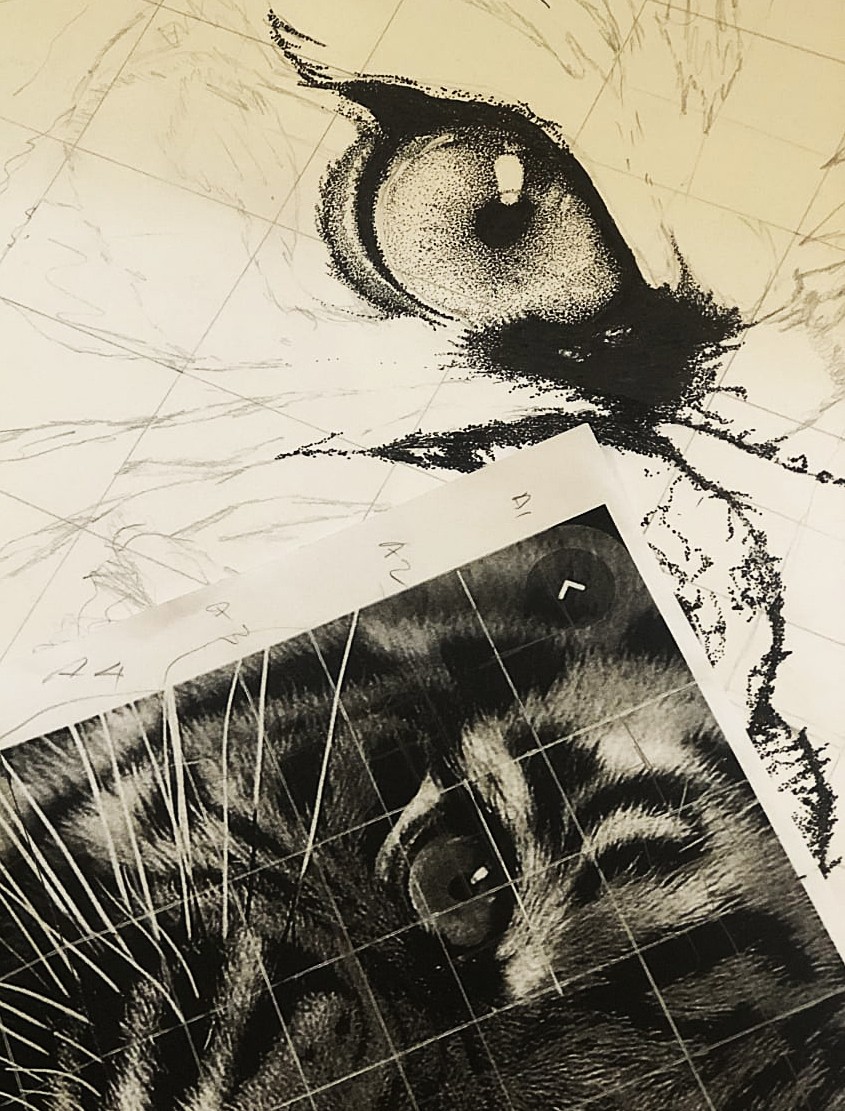
The works initially developed through close observation and
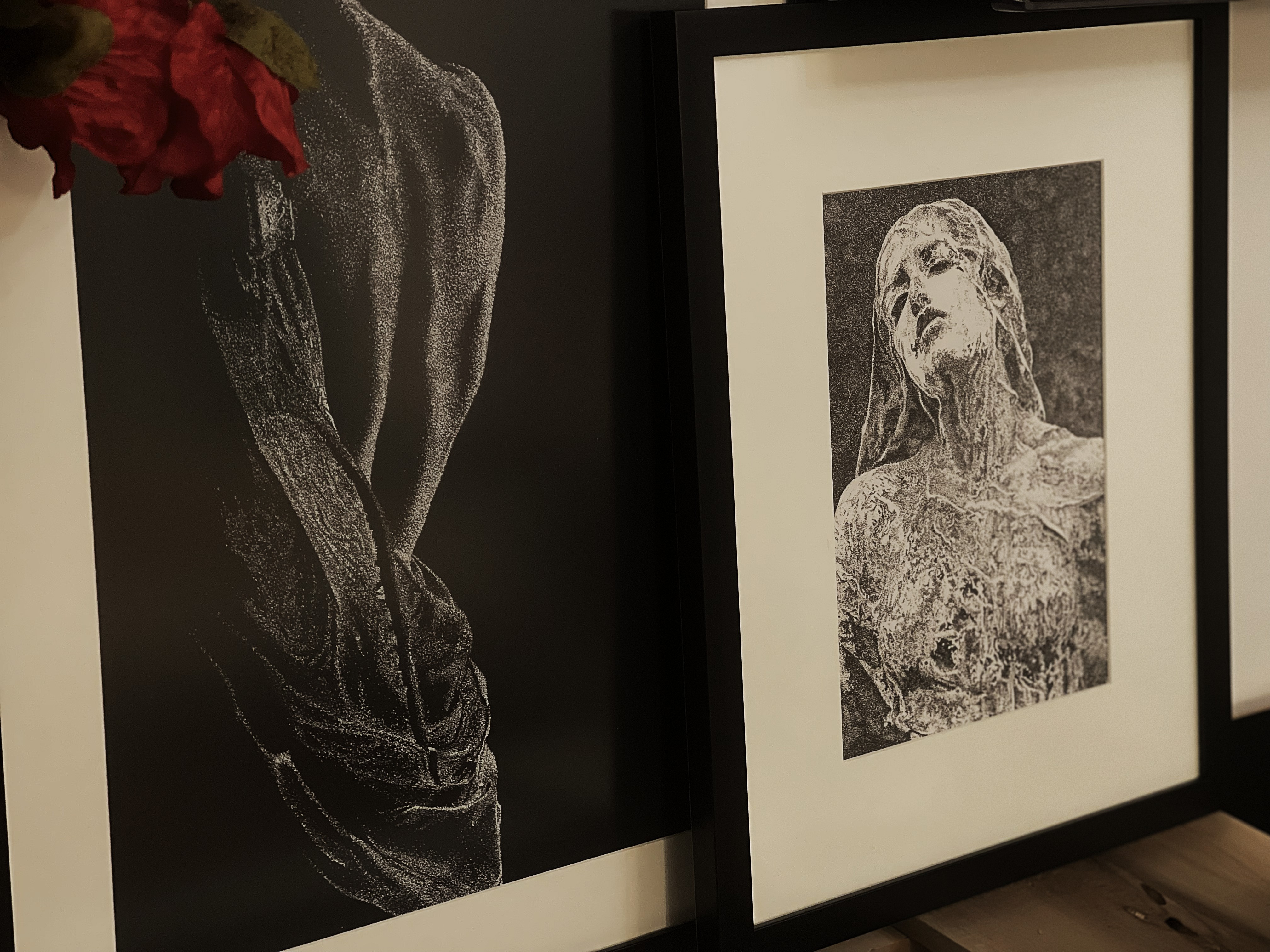
repetition, often drawn from photographic images of sculptural forms. Early
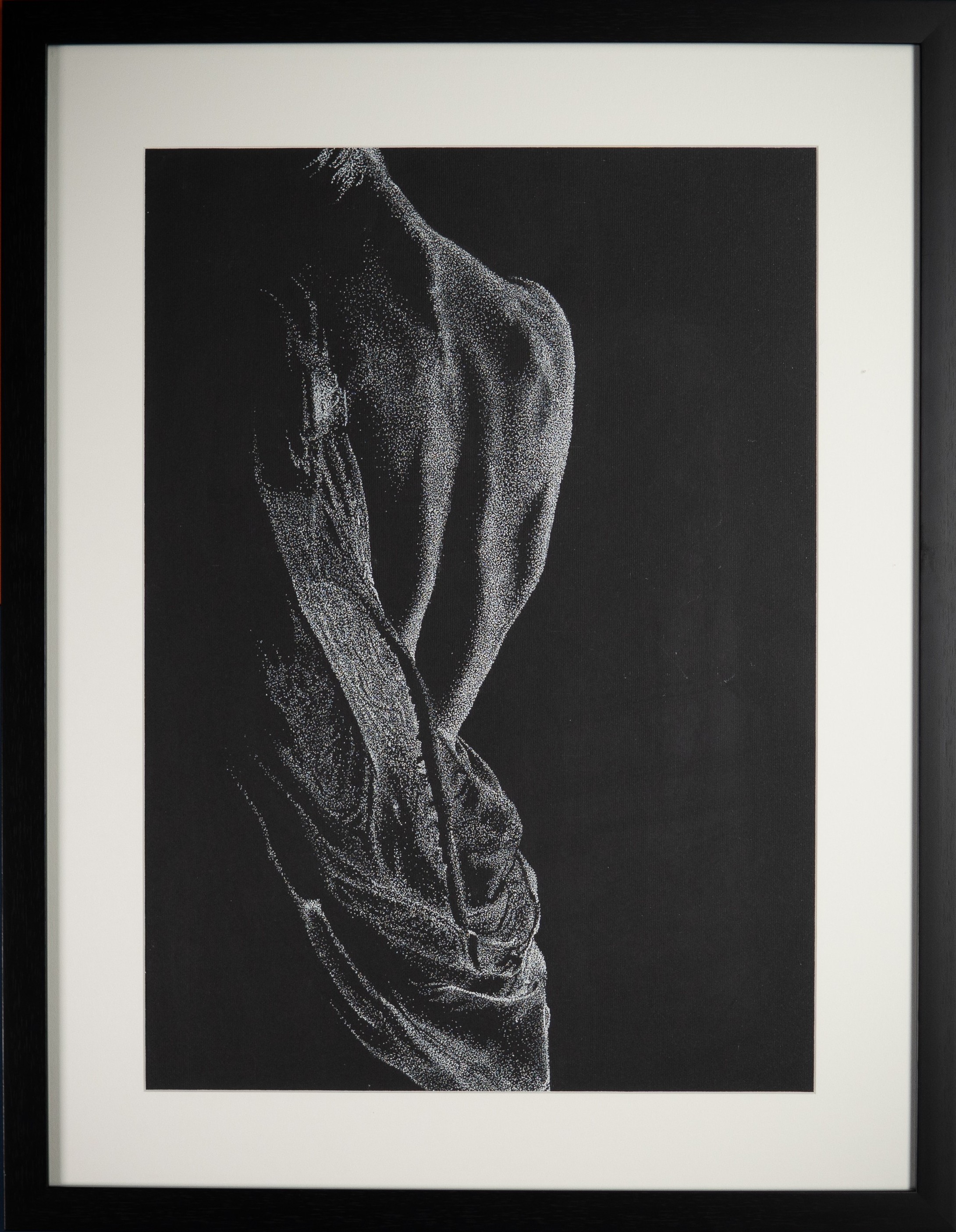
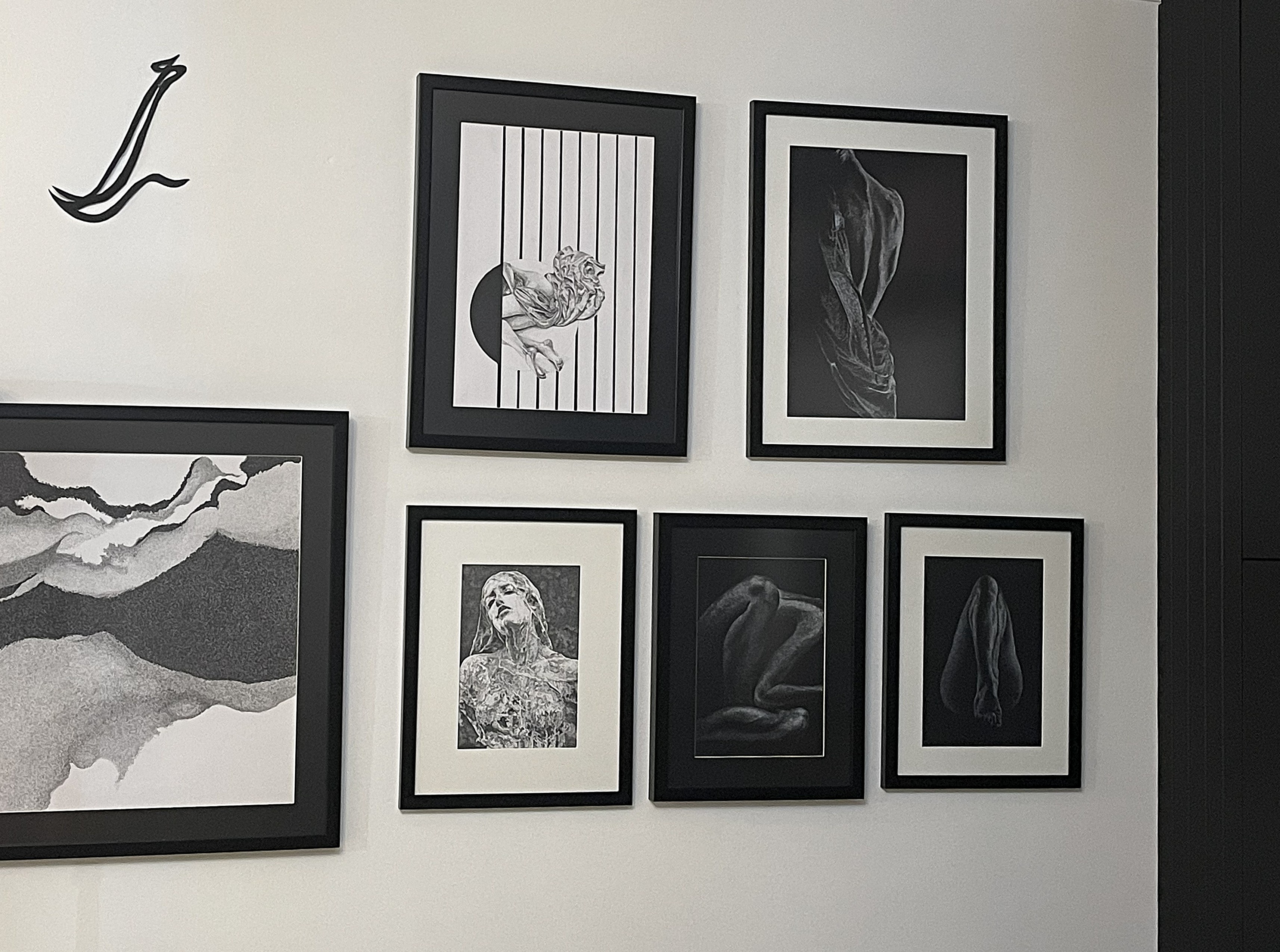
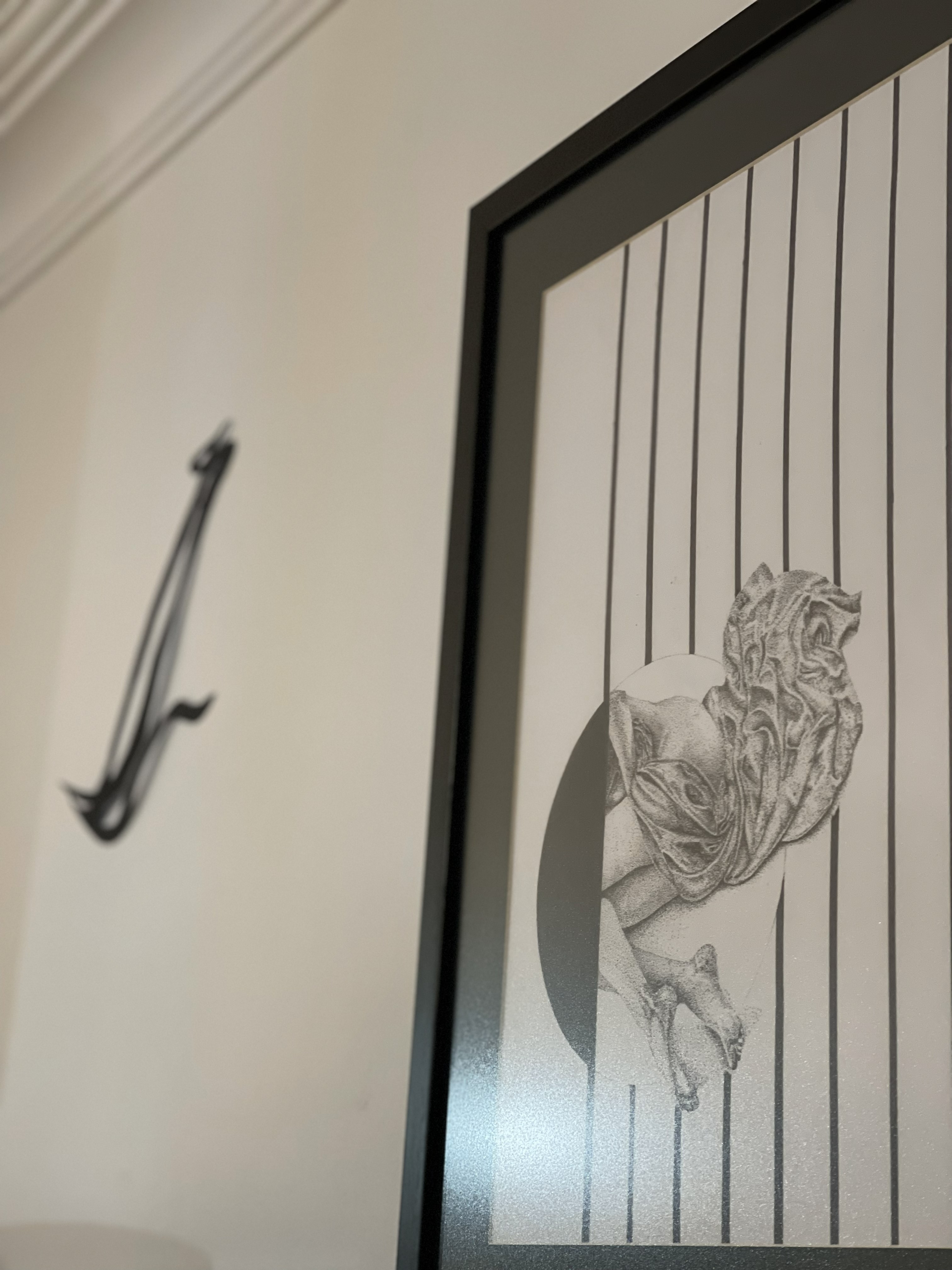
drawings leaned toward abstraction, gradually shifting toward fragmented
representations of the female body. At the time, these choices were not
consciously framed. Looking back now, they reveal an instinctive engagement
with bodily autonomy, femininity, and the presence of latent, structural
violence inscribed onto women’s bodies.
As this practice continued beyond its initial moment, it
remained situated within the same conceptual and emotional space while becoming
more focused. The emergence of the Woman, Life, Freedom movement in Iran (from
2022 onwards) did not initiate the work but sharpened its direction, offering a
broader socio-political lens through which earlier and ongoing drawings could
be re-read. Within this context, the female body increasingly appeared not as a
personal narrative, but as a site shaped by collective conditions,
restrictions, and unspoken forms of political and social violence.
What began as an inward, private practice can now be
understood as an autoethnographic process—one guided by intuition rather than
intention—through which questions of embodiment, control, and invisibilised
violence surfaced gradually. Dotwork functioned as a foundational language,
later expanding into three-dimensional and spatial practices, while maintaining
its focus on the body as a site of memory, vulnerability, and resistance.